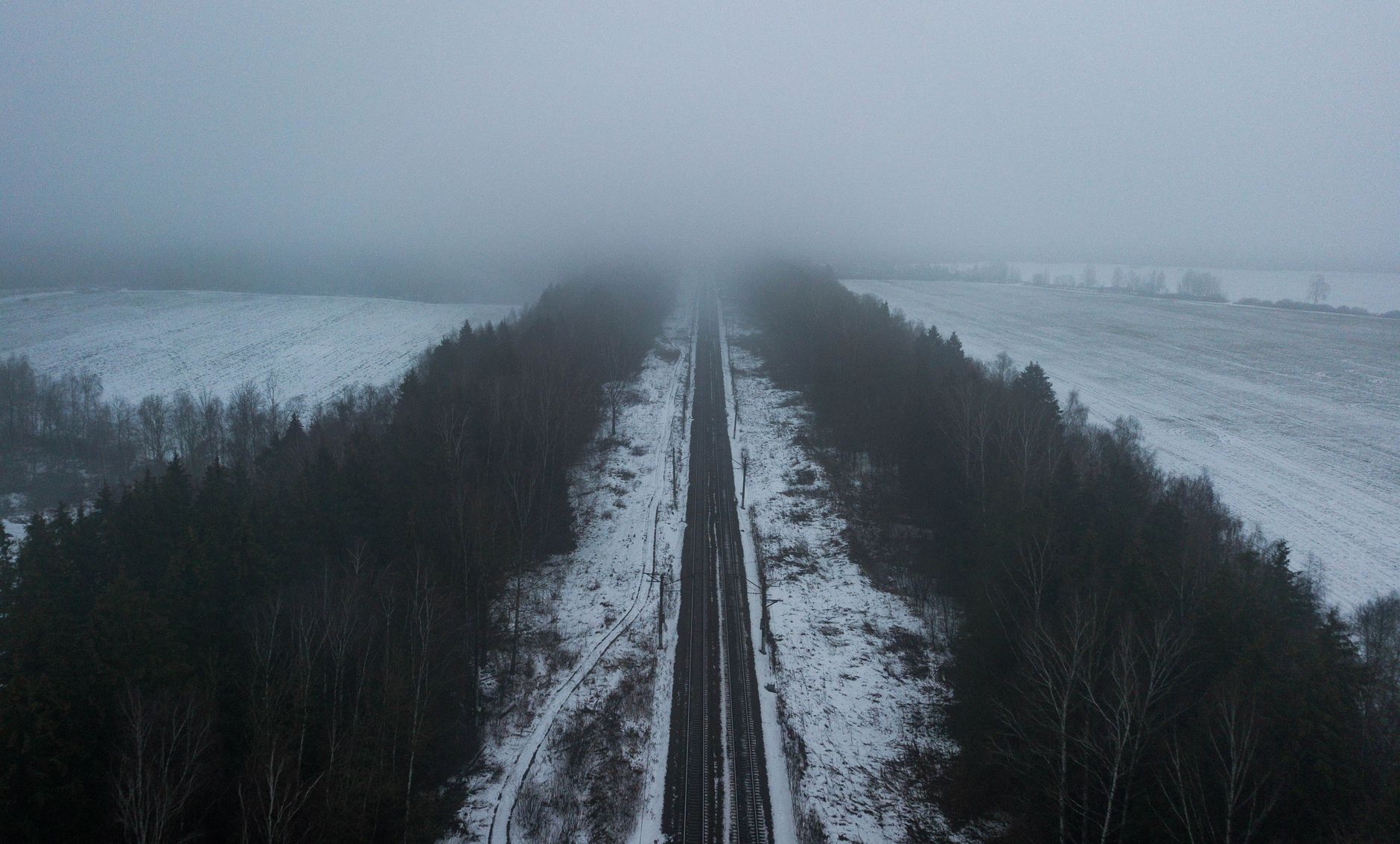
The Night at Bridego Bridge
Just after 3 a.m. on 8 August 1963, the Glasgow-to-London Travelling Post Office train was rolling through the Buckinghamshire countryside when it slowed unexpectedly near Bridego Railway Bridge, close to the village of Ledburn. The signals had been tampered with — a green light covered, an amber light rigged in its place — and that simple trick brought a train carrying more than £2.6 million in used banknotes to a stop.
A gang of around 15 to 17 men, many of them seasoned criminals, was waiting. They had rehearsed. They had a retired train driver on hand to move the locomotive. What they hadn't fully accounted for was that their substitute driver couldn't actually operate that particular engine, which meant the real driver, Jack Mills, was forced to stay at the controls. Mills was struck on the head during the assault and never fully recovered from his injuries. It remains the most troubling legacy of an otherwise meticulously planned operation.
Within half an hour, the gang had transferred 120 mailbags containing the equivalent of tens of millions in today's money down the embankment to a convoy of waiting vehicles.
The Gang and the Getaway
The robbers drove to Leatherslade Farm, a remote property in Buckinghamshire roughly 27 miles from the robbery site. The plan was to lie low for a few days, divide the money, and disperse before police widened their search. It was a sensible plan, undone by poor discipline. The gang stayed longer than intended and, critically, failed to clean the farmhouse before leaving.
Police received a tip about Leatherslade Farm within days and moved in to find a trove of forensic evidence — fingerprints on vehicles, on a Monopoly board the gang had reportedly played with during the wait, on food tins, and across surfaces throughout the property. That evidence would eventually place more than a dozen men at the scene.
The Investigation
Detective Superintendent Tommy Butler of Scotland Yard led the investigation. Working from the fingerprint evidence collected at Leatherslade Farm, Butler's team identified suspects rapidly. Arrests began within weeks of the robbery.
The accused were tried at Aylesbury Assizes in 1963 and 1964. Forensic evidence, including fingerprints lifted from the farm, was central to the prosecution's case. Prosecutors presented the robbery as a carefully organized criminal conspiracy, and juries agreed.
Sentences, Convictions, and Controversies
The 1964 verdicts were severe. Multiple members of the gang received sentences of 25 to 30 years, which shocked even seasoned legal observers. The length of the sentences reflected both the scale of the theft and the assault on Jack Mills.
Ronnie Biggs was among those convicted. He received a 30-year sentence but served only a fraction of it before escaping from Wandsworth Prison in 1965. Biggs spent decades as a fugitive, eventually settling in Brazil, where extradition treaties offered him a measure of protection. He voluntarily returned to the United Kingdom in 2001 and was imprisoned on his return. He was released on compassionate grounds in 2009 due to serious ill health, and died on 18 December 2013.
Other gang members had varied outcomes. Some served substantial portions of their sentences. Some cooperated with authorities or had convictions reduced on appeal.
| Gang Member | Sentence | Notable Outcome | |---|---|---| | Ronnie Biggs | 30 years | Escaped 1965, returned 2001, released 2009 | | Charlie Wilson | 25 years | Escaped 1964, recaptured 1968 | | Gordon Goody | 25 years | Served sentence | | Brian Field | 25 years | Reduced on appeal | | Bruce Reynolds | 25 years | Arrested 1968, served sentence |
What Happened to the Money
Of the approximately £2.6 million stolen, the majority was never recovered. Police retrieved portions of the cash in the weeks and months after the robbery, and some money surfaced years later through various means. But a large share simply vanished. The identities of everyone involved in planning and financing the robbery were never conclusively established, and the question of who ultimately masterminded the operation remains a point of debate. The Smithsonian Magazine has reported on theories and evidence potentially identifying the robbery's architect, though no definitive legal conclusion has ever been reached.
Legacy
The Great Train Robbery entered British cultural memory almost immediately. The scale of the theft, the theatrical audacity of stopping a Royal Mail train, and the subsequent escapes and high-profile trials gave the story a life far beyond the courtroom. The severe sentences prompted genuine public debate about proportionality in sentencing. Jack Mills, the train driver who was attacked that night, worked for only a few more years before health problems forced his retirement. He died in 1970.
The case is considered solved in the sense that most participants were identified, tried, and convicted. The stolen money, and any lingering questions about the full chain of command, are a different matter entirely.