What Is the Bennington Triangle?
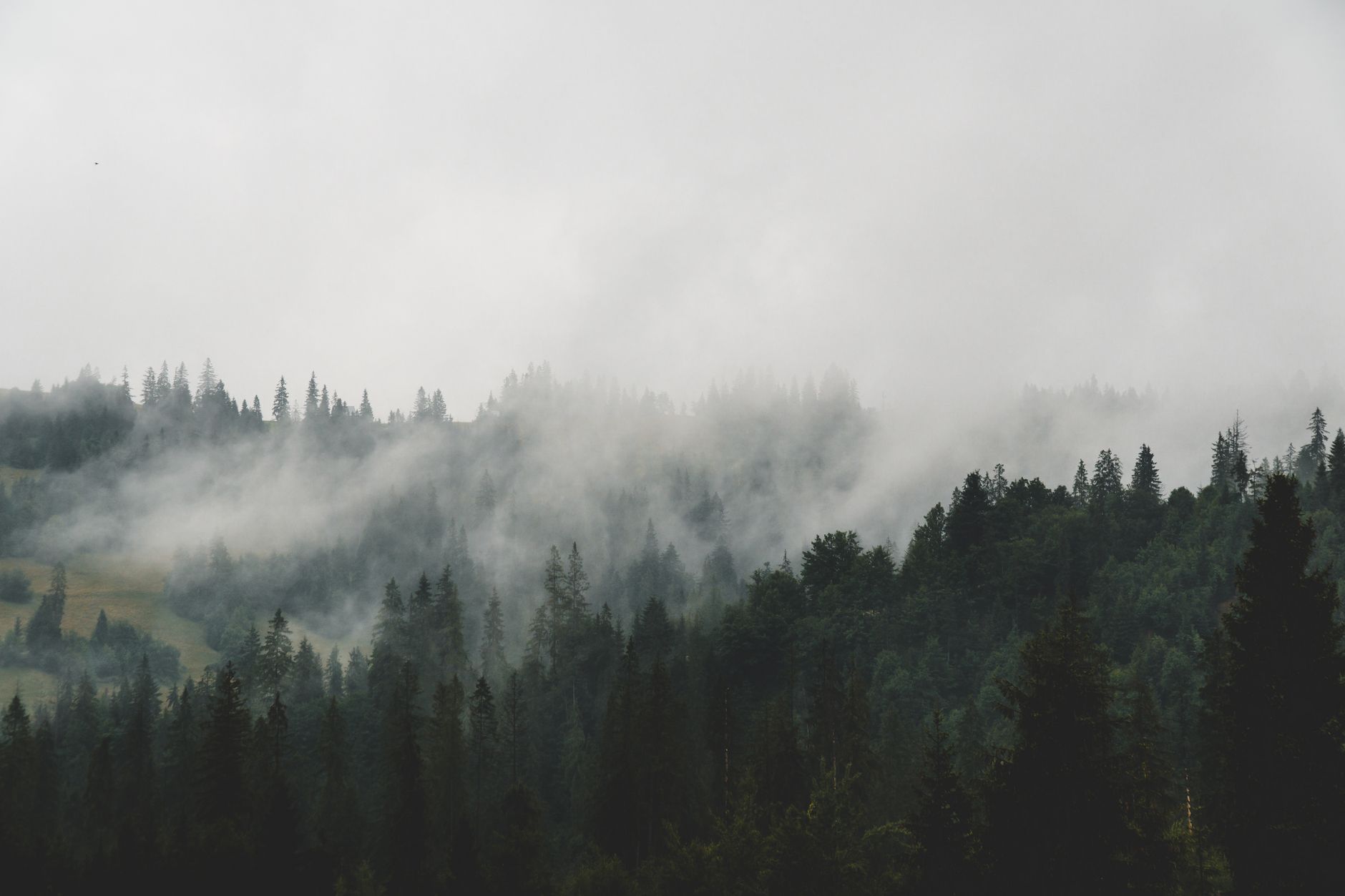
Southwestern Vermont doesn't look like the kind of place where people simply cease to exist. The Green Mountains are scenic, well-mapped, and well-loved by hikers. But tucked into Windham County sits a pocket of wilderness that earned a decidedly ominous nickname: the Bennington Triangle.
The term was coined by Vermont author and folklorist Joseph Citro, who used it to describe the area surrounding Glastenbury Mountain and the largely abandoned town of Glastenbury. Citro drew a loose geographic boundary that includes the Long Trail corridor, the wilderness townships of Somerset and Woodford, and the hills above the city of Bennington. The label stuck, partly because the disappearances it described were genuinely strange, and partly because the region already had a reputation among the Abenaki people, who traditionally considered Glastenbury Mountain to be cursed ground.
What makes the Bennington Triangle compelling as a mystery isn't any single case. It's the clustering: at least five people vanished from a relatively tight geographic area within a five-year window, under circumstances that ranged from puzzling to inexplicable.
The Disappearances: A Concentrated Pattern
The five most-cited cases span from 1945 to 1950. Here they are in order:
| Year | Name | Age | Circumstances | Outcome |
|---|---|---|---|---|
| 1945 | Middie Rivers | 74 | Experienced hunting guide; vanished leading a group; stepped ahead on trail | Never found |
| 1946 | Paula Welden | 18 | Bennington College student; witnessed walking around a bend on Long Trail; vanished | Never found |
| 1949 | James Tetford | 68 | Veteran; disappeared from a bus en route to Bennington with other passengers | Never found |
| 1950 | Paul Jepson | 8 | Child; disappeared from a farm truck cab while parent worked nearby | Never found |
| 1950 | Frieda Langer | 53 | Experienced hiker; went back alone after wet clothes incident; vanished | Body found 1951, cause undetermined |
Frieda Langer is the only victim whose remains were ever recovered. Her body turned up seven months after she disappeared, in an area that had reportedly been searched multiple times. The condition of the remains was too deteriorated to establish a cause of death.
The Paula Welden case became the most famous. Witnesses saw the Bennington College student walking the Long Trail near Glastenbury Mountain on a Sunday afternoon in December 1946. Multiple people reported watching her round a bend in the trail, only to find the path empty when they reached the same spot moments later. The disappearance was so disturbing it led directly to the creation of the Vermont State Police.
James Tetford's case is arguably the strangest. Fellow passengers on a Vermont Transit bus confirmed he had boarded in St. Albans and was present for earlier stops. When the bus arrived in Bennington, his seat was empty, his luggage still in the rack above it.
The Natural and Criminal Explanation
Skeptics and criminologists point to the obvious first: Glastenbury Mountain and the surrounding wilderness are genuinely dangerous. The terrain is steep, the weather unpredictable, and the forest dense enough to swallow a person with grim efficiency. Vermont's backcountry claimed lives regularly throughout the 20th century, and the failure to recover remains doesn't require anything exotic. Bodies can drift into ravines, be scattered by wildlife, or simply decompose beyond detection.
Middie Rivers was 74 years old and hiking in hunting season. A fall, a cardiac event, or simple disorientation in fading light could explain a vanishing without any mystery attached. Paul Jepson was a child near a working farm in an era with none of the safety infrastructure modern parents take for granted. Accidents happen.
Some analysts have noted that the Tetford case, despite its dramatic trappings, could have a mundane explanation. Passengers' memories are unreliable, stops are easy to lose track of, and an older man could have disembarked quietly without drawing notice. His belongings remaining on the bus is odd, but not impossible to explain through confusion or haste.
As for why so many cases clustered between 1945 and 1950: that concentration may reflect the postwar period's increase in recreational hiking, combined with newly formalized reporting infrastructure that began capturing cases that might have been quietly absorbed in earlier decades.
Still, skeptics acknowledge that several of these cases resist clean resolution. The Paula Welden disappearance, in particular, involved multiple eyewitnesses in daylight and a trail with no realistic escape route. No official explanation has ever been offered.
The Paranormal and Folkloric Perspective
For paranormal researchers and enthusiasts of unexplained phenomena, the Bennington Triangle represents something more than a run of tragic accidents. The geographic and temporal clustering, the failure of organized searches, and the specific oddities (a man vanishing from a moving bus, a woman disappearing in plain sight) all feed a narrative that something about this particular landscape is different.
Glastenbury Mountain has a long history of unsettling reputation. The Abenaki avoided it, early settlers who attempted to build a town there largely abandoned it by the early 20th century, and the area has long circulated in regional folklore as a place where the normal rules don't apply. Some researchers have pointed to reported anomalies in the area including compass irregularities and disorientation among hikers, though these reports are anecdotal and not scientifically documented.
Joseph Citro, who gave the triangle its name, has written extensively about the region's folklore without personally endorsing supernatural explanations. The naming itself, modeled loosely on the Bermuda Triangle concept, did what good branding always does: it provided a frame that made scattered incidents feel like a pattern.
The honest counterpoint, as paranormal investigators themselves often acknowledge, is that no physical evidence supports a supernatural explanation. The terrain is rugged, the wilderness vast, and the absence of bodies proves nothing beyond the obvious truth that forests are very good at keeping secrets.
What the Record Actually Shows
The Bennington Triangle disappearances share a few notable characteristics regardless of what caused them:
- All five core cases remain officially unsolved.
- Searches, many of them extensive, failed to locate remains in four out of five cases.
- The cases stopped clustering after 1950, with no comparable series of disappearances in the same area since.
- The Vermont State Police was established in direct response to the inadequate investigation of Paula Welden's disappearance.
- The one recovered body (Frieda Langer) produced no usable cause-of-death determination.
The lack of resolution isn't unusual for wilderness disappearances of that era. What's unusual is the density of cases, the specific circumstances of a few of them, and the degree to which conventional explanations require a certain amount of special pleading when applied to the Welden and Tetford cases in particular.
Where Things Stand
Glastenbury Mountain sits largely within the Green Mountain National Forest today, accessible by trail but still remote by Vermont standards. The ghost town of Glastenbury has no permanent residents. The Long Trail still passes through the area where Paula Welden was last seen.
None of the five cases has been officially closed with a cause determined. No arrests were ever made. No confessions emerged. No remains beyond Langer's were ever recovered.
Joseph Citro's label gave these scattered tragedies a shared identity, and in doing so, kept them in public memory long after the investigations went cold. Whether the Bennington Triangle represents a genuine geographic anomaly, a tragic run of wilderness accidents, or something in between, the answer hasn't gotten any closer in the seven decades since Middie Rivers stepped ahead on that trail and didn't come back.